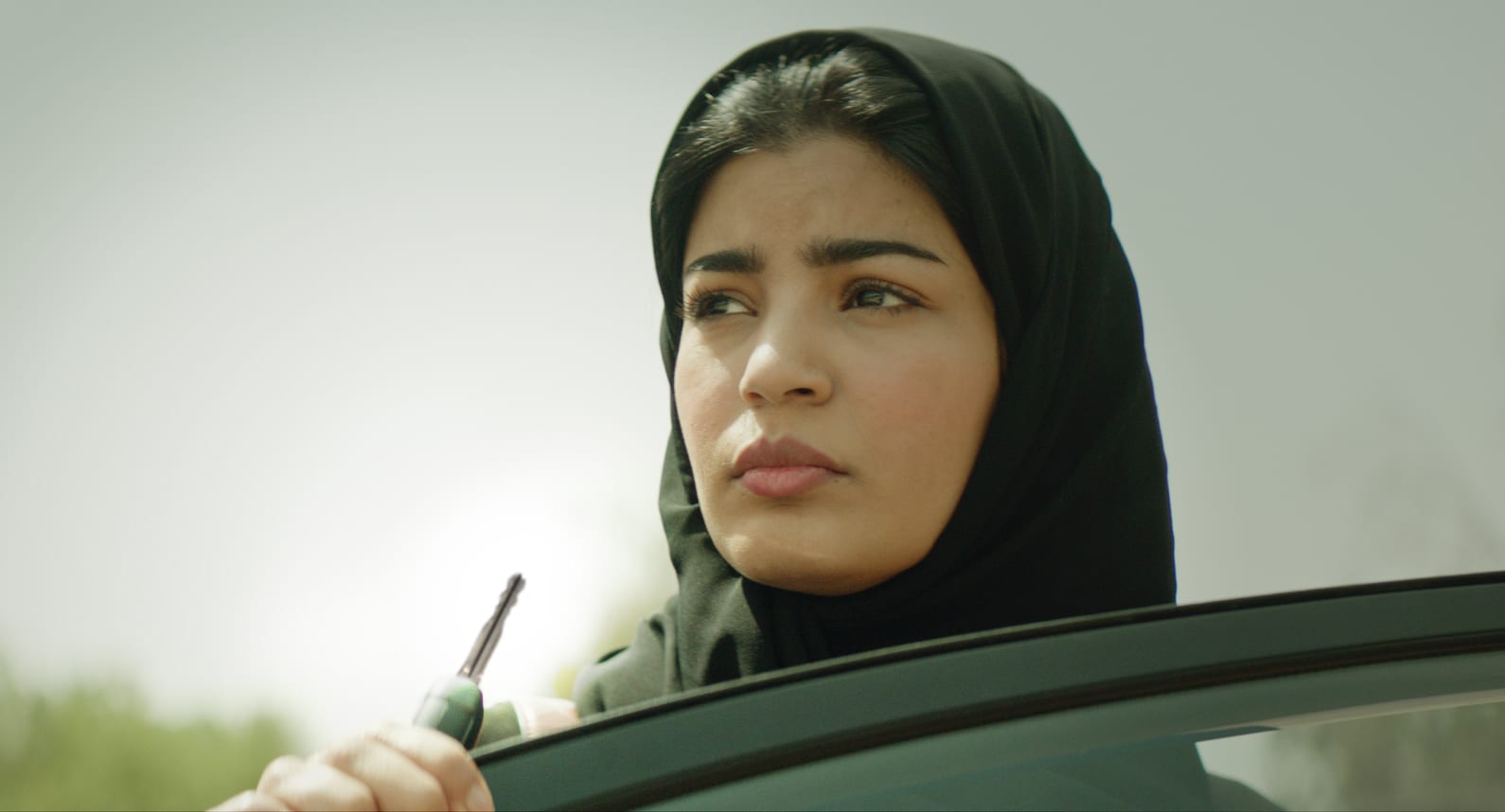
Sometimes, it’s easier to ignore the past than deal with it.
Directed by Ronan Day-Lewis, Anemone tells the story of Brian Stoker (Samuel Bottomly), a young man who finds himself struggling after a fight threatens his military record. Terrified that her son is losing his way, his mother (Samantha Morton) sends his uncle, Jeb (Sean Bean) on a mission to find Brian’s estranged father, Ray (Daniel Day-Lewis). Having abandoned his family almost twenty years ago, Ray lives a life of solitude in the wilderness and is torn by the appearance of Jeb. However, Jeb refuses to leave until Ray returns with him in the hopes of fixing their shattered family.
Co-written as a father-son duo, Ronan and Daniel Day-Lewis have woven a fascinating fable about the complexities of fathers and sons. Featuring some wild visuals and powerful performances, Anemone feels like a fractured fairytale. Often grounded within its family tension, there are moments when Ronan pushes the film’s sense of whimsy into the darker corners of fantasy, especially through the natural world. In this way, there is a very real sense that, as Ray battles within himself, so too does it shake the fabric of the universe in the most violent of ways.
Of course, it goes without saying that the film features another stellar performance by the elder Day-Lewis. Without question, the Oscar winner’s legacy is established as one of the greatest performers of all time and Anemone gives him lots of room to work his magic. With the slightest twinge of his mouth or glint from his eye, Day-Lewis has the ability to communicate volumes about his character.
And, as Ray, he brings a ferocity to his character’s silence.
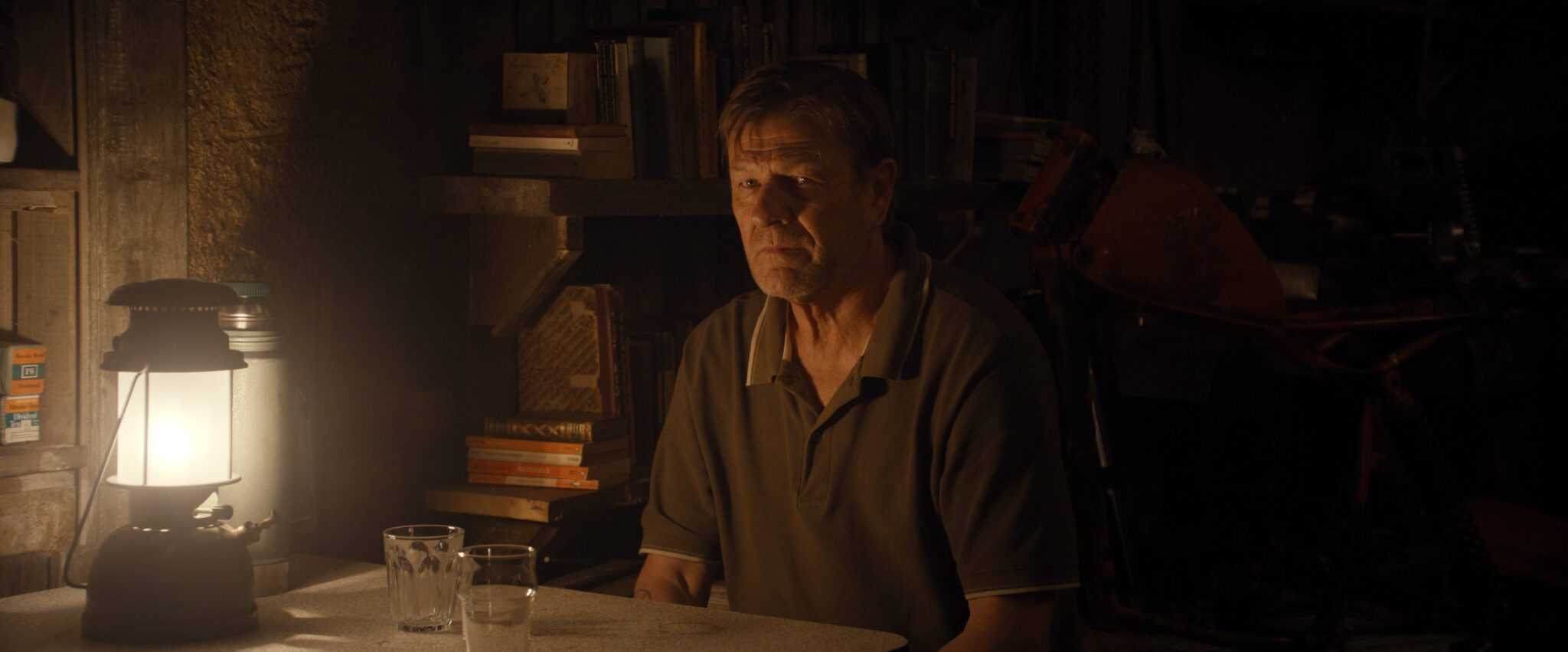
Sean Bean stars as Jem in director Ronan Day-Lewis’s ANEMONE, a Focus Features release.
Credit: Courtesy of Focus Features / © 2025 Focus Features, LLC. All Rights Reserved.
Having lived a life of solitude for almost twenty years, Ray is a man who has buried his emotional scars within the deepest regions of his heart. At every moment, Day-Lewis plays Ray as a powder keg of emotion but refuses to acknowledge it. He’s allowed himself the luxury to pretend that the past doesn’t exist. He lives for the moment now. And it feels like he always has. An example of this may be an impromptu scene that feels almost out of place, were it not for the fact that it follows immediately after a small glimpse into his soul. This is a moment of distraction; of forcing himself to focus entirely on the music around him so that he doesn’t have to think any more about his suffering.
But his engagement with his brother continuously knocks on his hardened heart. To Ray, Jem’s persistence becomes a hammer to his hardened shell. Ray doesn’t want Jem there as he is a reminder of his other life but Jem wont leave. After all, Jem and Ray may have come from the same home but they are not the same.
Here, Bean does a wonderful job, bringing out his character’s frustration and empathy all in the same space. Even so, Jem will not be deterred. His fire is one of purpose and compassion. He knows why he has come and he is determined to complete his own personal mission. To Jem, the fate of his family is at stake yet he never loses his empathy for his brother.
It’s this push and pull that holds Anemone together. The tension between Day-Lewis and Bean is palpable, especially in the silence. (In fact, the film’s quiet opening sequence in Ray’s cabin is utterly pregnant with meaning, even if we have yet had the chance to get to know the two men.) Their relationship is what pushes Ray further inward, threatening the peace that he’s constructed all these years alone.
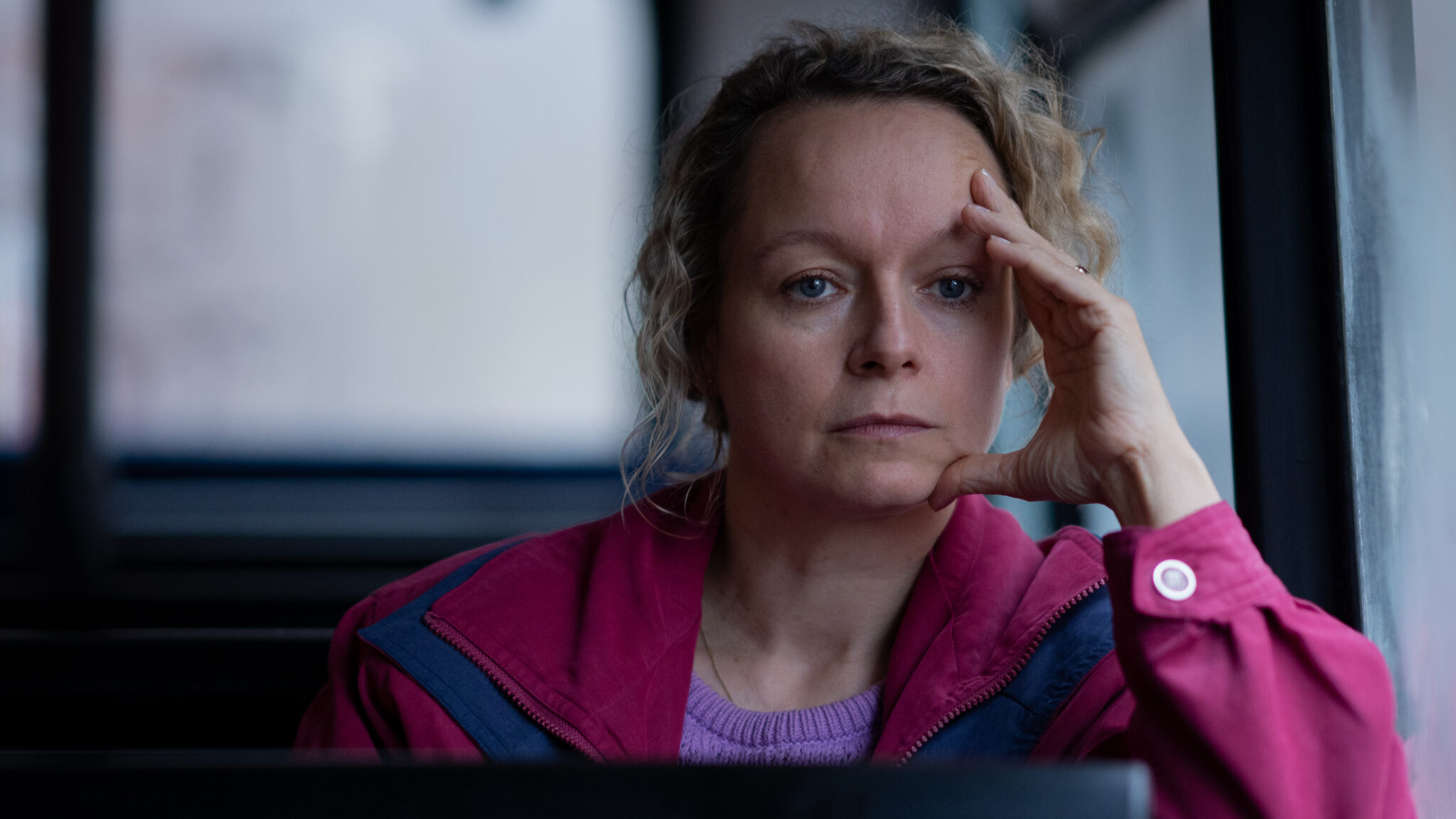
Samantha Morton stars as Nessa in director Ronan Day-Lewis’s ANEMONE, a Focus Features release.
Credit: Des Willie/Focus Features / © 2025 Focus Features, LLC. All Rights Reserved.
And that inner struggle provides the complexity that makes Anemone worthwhile. Ray isn’t just a ‘grumpy old man’. He’s broken, shattered by experiences that people have been whispering about for years back home. The events that may (or may not) have happened have stolen a piece of his life for almost two decades and the hardness of his heart is one of self-protection, not entirely selfishness.
In short, the Ray of the past is long gone. And the Ray of the present has no desire to see him again.
But the Day-Lewis’ use this as the backdrop for their exploration of the relationship between fathers and sons (and, of course, brothers). As Ray (and Jem) wrestle with the wreckage that was their own connection with their father, so too has Ray left his own bond with Brian to fall by the wayside. Yet, even with all the damage that has been done, Anemoneacknowledges the role that fathers retain in our lives. Whether they’ve been helpful, hurtful or simply absent, fathers play a role in all of our stories and the film does a fascinating job of exploring those aspects of our souls.
Now, having said all of this, not all of Anemone goes swimmingly. While Day-Lewis and Bean are mesmerizing, the story at home lacks the same level of intensity. Samantha Morton and young Samuel Bottomly do an admirable job but they’re not given nearly enough to do, given all that they’ve established with his father. As a result, the film does feel disjointed, leaving the viewer feeling surprisingly empty when they’re back in the city with mother and son. What’s more, in his first feature, Ronan does do an admirable job as director but there are moments where he might reach too far in his creative ambition (such as the giant fish).
Unfortunately, these short-comings prevent Anemone from truly elevating itself into something remarkable. (And admittedly, that feels almost like an unfair bar to achieve.) However, despite its flaws, some wonderful work by Daniel Day-Lewis and Sean Bean does give Anemone a strong foundation that makes it worth exploring.
Anemone is available in theatres on Friday, October 3rd, 2025.