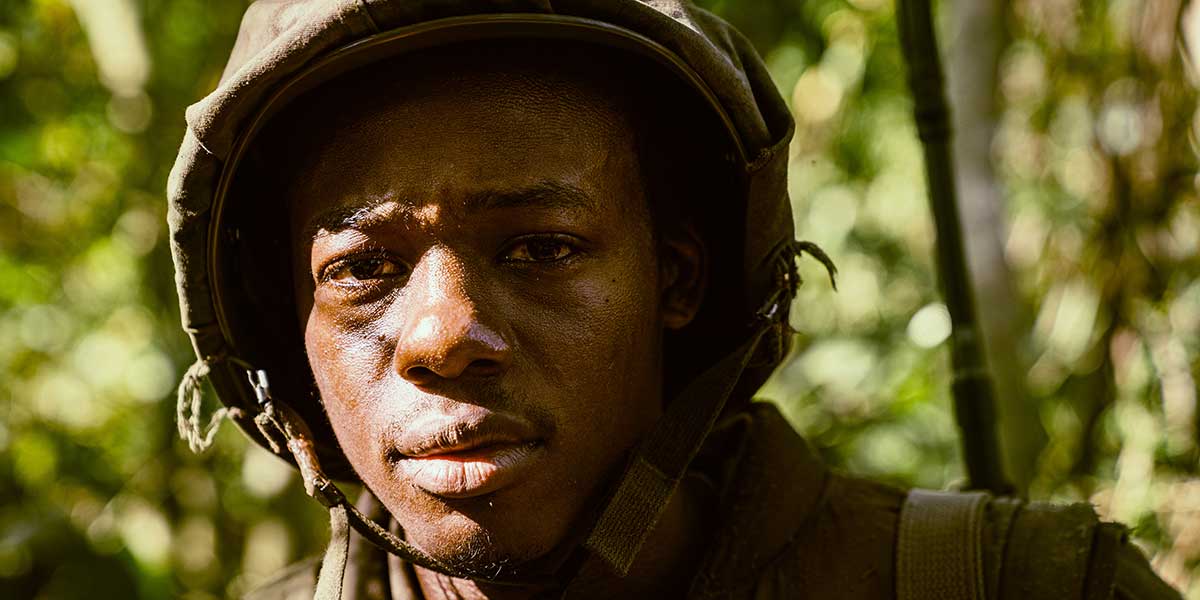
Within the first 20 minutes of Mr. Nelson, Did You Kill People?, I watched a Black father brutally assault his wife in front of their terrified children before being killed by police in front of those same children. I watched a Black American soldier violently assault a Vietnamese sex worker after refusing to pay her. Then, I watched three Black soldiers beat a Vietnamese cab driver over his fare while Allen Nelson stood by.
At some point, I stopped asking what Shinya Tsukamoto wanted me to understand and started wondering why I was watching any of this. I understand the argument the film is making. War does not simply traumatize people; it creates environments where violence becomes institutionalized, rewarded, and normalized. Nelson comes from poverty and childhood trauma before entering another system designed to transform vulnerable young men into soldiers capable of killing. There is also an important story here about Black Americans being asked to fight and die for a country that denied them equality at home, only to be abandoned once they returned.
But depicting brutality is not inherently the same thing as interrogating it.
Tsukamoto bombards the audience with violence so relentlessly that eventually the horror stops illuminating Nelson’s psychology and begins overwhelming it. What is particularly troubling is how frequently Vietnamese characters and women become bodies through which the film demonstrates the moral deterioration of American men. Their suffering may establish the brutality of war, but they are afforded considerably less interiority than the men committing violence against them.
The central question: “Mr. Nelson, did you kill people?” should be devastating. The film wants us to consider what happens when a country manufactures killers, sends them into unimaginable circumstances and then leaves them to carry that violence home. That is a worthwhile question.
Unfortunately, Mr. Nelson, Did You Kill People? left me so exhausted by its methods that I struggled to engage with its answer. There may be humanity buried underneath all this brutality, but I found reaching it impossible.
For me, this wasn’t harrowing. It was simply unwatchable.