
Karen Lam’s Armageddon Road takes us back to 1976 Las Vegas, where the mob still rules the city, dreams of a better life are just out of reach, and one unlucky chauffeur finds himself caught in something far bigger than he could ever imagine.
Steve McNaulty (Brian McCaig) is an ex-con with big dreams and very little luck. Working as a chauffeur for a mob boss, he is trying to make ends meet while dreaming of turning a desolate Las Vegas parking lot into something much bigger and, more importantly, hoping to regain custody of his son.
His latest assignment seems simple: chauffeur the boss’s girlfriend, Delilah (Natalie Grace), around town for the night.
Well, guess what? It isn’t.
After Delilah unexpectedly dies from a drug overdose at a party, something supernatural takes over her body. Suddenly, Steve is unknowingly driving around with one of the Four Horsemen of the Apocalypse sitting beside him, and she has somewhere she needs to go.
Now, Steve isn’t simply driving a difficult passenger across the desert. He’s being pulled into a journey that could determine the fate of humanity.
And somehow, Steve still has to get through his shift.
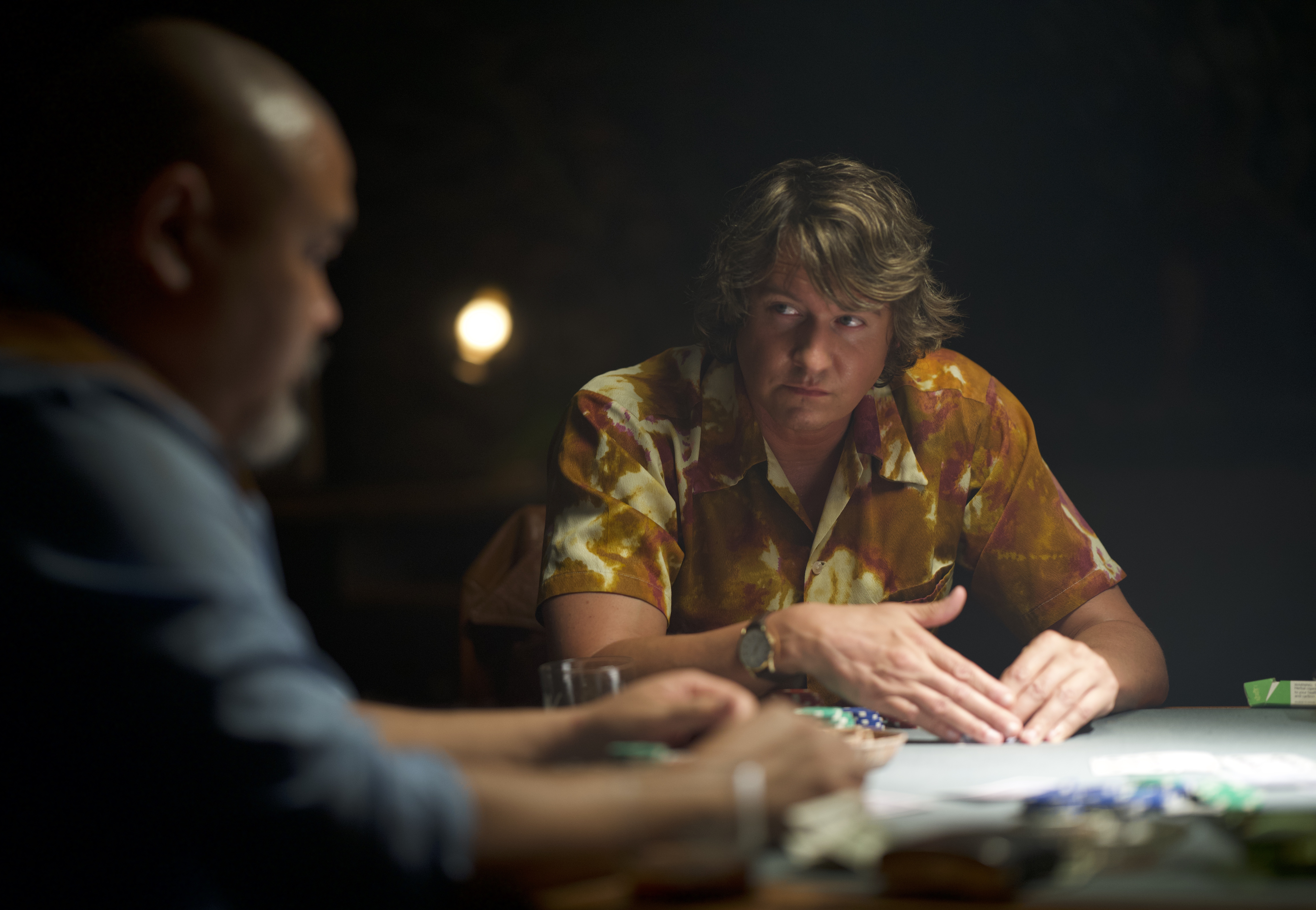
That’s where much of Armageddon Road’s humour comes from. Steve is an ordinary man desperately trying to maintain some sense of control, while Delilah is dealing with forces far beyond anything he can comprehend. Her increasingly strange demands are treated by Steve almost like the exhausting inconveniences of another difficult night behind the wheel. As he puts it, “Look, lady, I don’t care if you’re the end of days, my shift ends at dawn, and I’ve got a lot to lose if this car gets a dent.” It perfectly captures the film’s ability to take something as enormous as the apocalypse and filter it through the very ordinary frustrations of a man just trying to get through the night.
Armageddon Road refuses to stay in one lane. It is part horror, part fantasy, part romance, part crime story, and part an unlikely road-trip adventure. There are supernatural forces, an impending apocalypse and a passenger who is not quite what she seems (literally), but the film is just as interested in the two people sitting inside the car.
Because, beneath the Four Horsemen and the end-of-the-world lore, this is a story about choice, fate and purpose.
Steve spends much of his life trying to build a future from circumstances that seem determined to work against him. He has made mistakes, lost time and is determined to get another chance. Yet the further he travels, the more the film questions whether any of us really control where our lives take us.
Delilah, meanwhile, represents something almost entirely different. At first, she seems to have everything Steve doesn’t. She has money, freedom and connections, but none of it necessarily means she knows what she wants. After her transformation, Steve begins to see a completely different side of the woman sitting beside him.
As the supernatural forces surrounding her become impossible to ignore, Steve is forced to confront the possibility that some things simply cannot be controlled, negotiated or explained away.
And yet, their journey begins to create an unexpected connection between them.
What begins with irritation and distrust gradually becomes curiosity, connection and something neither of them expected. Their conversations turn the road trip into something more than a journey from one destination to another. They begin questioning the lives they’ve been living and whether the paths they are on were ever really their own.
That makes the supernatural story surprisingly personal.
The Four Horsemen may represent the end of the world, but Steve and Delilah are wrestling with an equally frightening question: how much of our lives is actually up to us?
Are we following a road that has already been chosen for us, or can we still decide where it takes us?
Lam uses Biblical motifs to explore those questions without turning the film into a traditional apocalyptic horror story. The result is something stranger and more playful, allowing the film to move between existential ideas, romance and dark comedy without ever completely settling into one genre.
The visual style follows that same philosophy.
Lam combines modern LED Volume technology with miniature cars and sets to create her version of 1970s Las Vegas. The miniature road sequences don’t attempt to look completely realistic. Instead, they give the film a handmade, almost dreamlike quality that fits its surreal story perfectly.
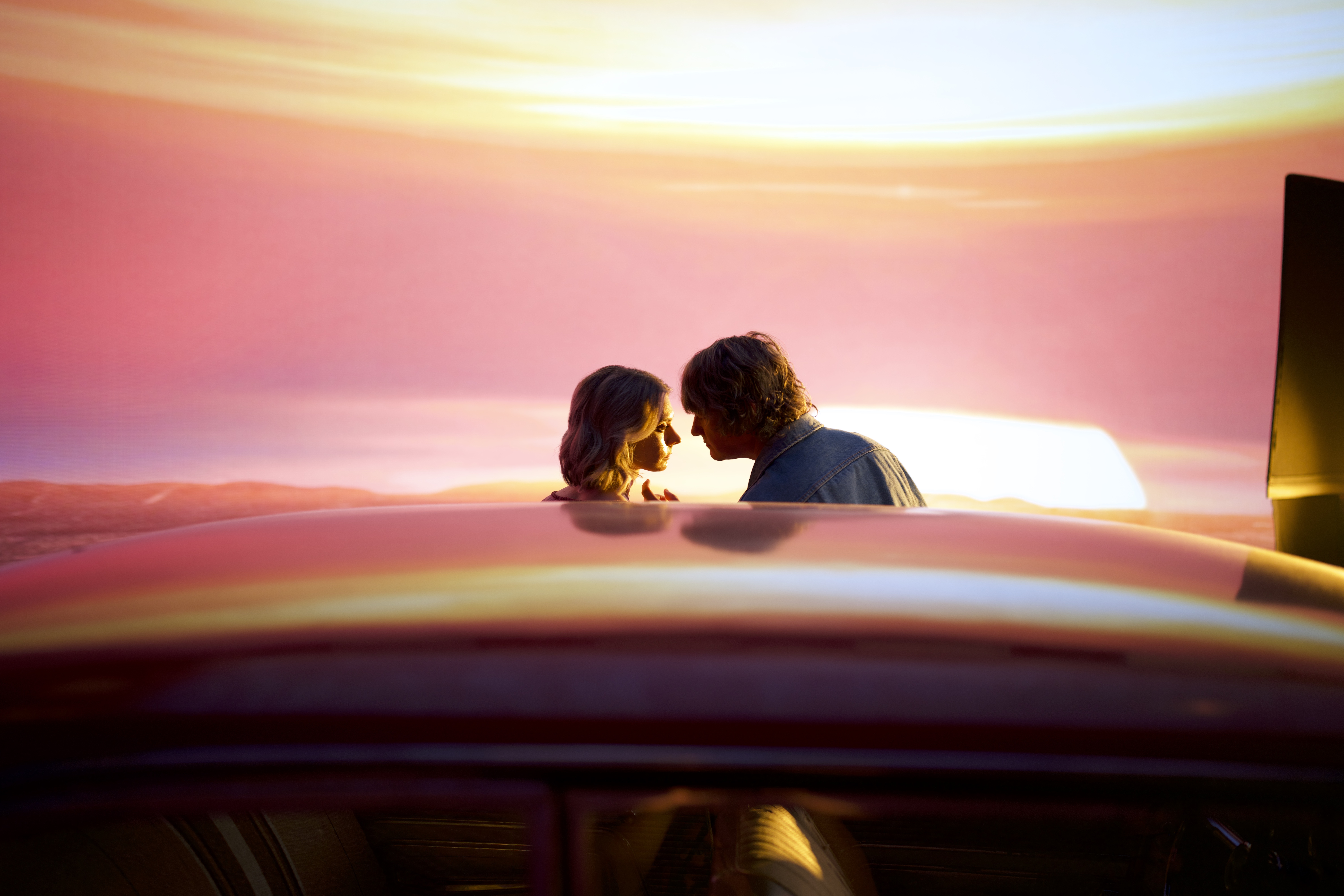
There is something wonderfully old-fashioned about watching these miniature cars travel through a world created with cutting-edge technology. It feels like the film is deliberately playing with time, blending the nostalgia of old Vegas with a story about humanity staring down the end of everything.
And then there are McCaig and Grace.
The film depends heavily on their chemistry, and fortunately, they make the unlikely pairing work. McCaig gives Steve an instantly likeable quality, balancing the character’s desperation with the optimism of someone who refuses to completely give up on his dreams. Grace brings a playful mystery to Delilah, particularly as the character becomes increasingly separated from the woman Steve originally met.
There is something endearing about watching these two very different people travel together towards a destination neither can fully understand. The road becomes more than a physical journey through the Nevada desert. It becomes a space where questions about fate, choice and purpose can unfold.
Together, they give the apocalypse a surprisingly human centre. And perhaps this is where the film finds its heart.
Armageddon Road isn’t necessarily interested in frightening us with the end of the world. Instead, it uses the apocalypse to ask questions about the lives we are already living.
What if fate has a plan for us?
What if it doesn’t?
And what if the people we meet along the way are the very ones who help us understand ourselves?
The film’s unusual tone and surreal mythology may not work for everyone, and audiences expecting a traditional horror movie should know that this is much more interested in character, conversation and atmosphere than blood and gore.
But there is something refreshing about a film willing to embrace its own uniqueness.
Armageddon Road is ultimately a story about two people travelling toward the end of the world while trying to figure out what they want from the lives they still have.
Sometimes the road ahead is already waiting for us.
Sometimes we choose where it goes.
And sometimes, the strangest passenger can completely change the journey.
Armageddon Road hits the road at Toronto’s Revue Cinema September 3 and 4, with Karen Lam and cast and crew in attendance.
So buckle up. The Four Horsemen are coming—and this apocalypse needs a chauffeur.