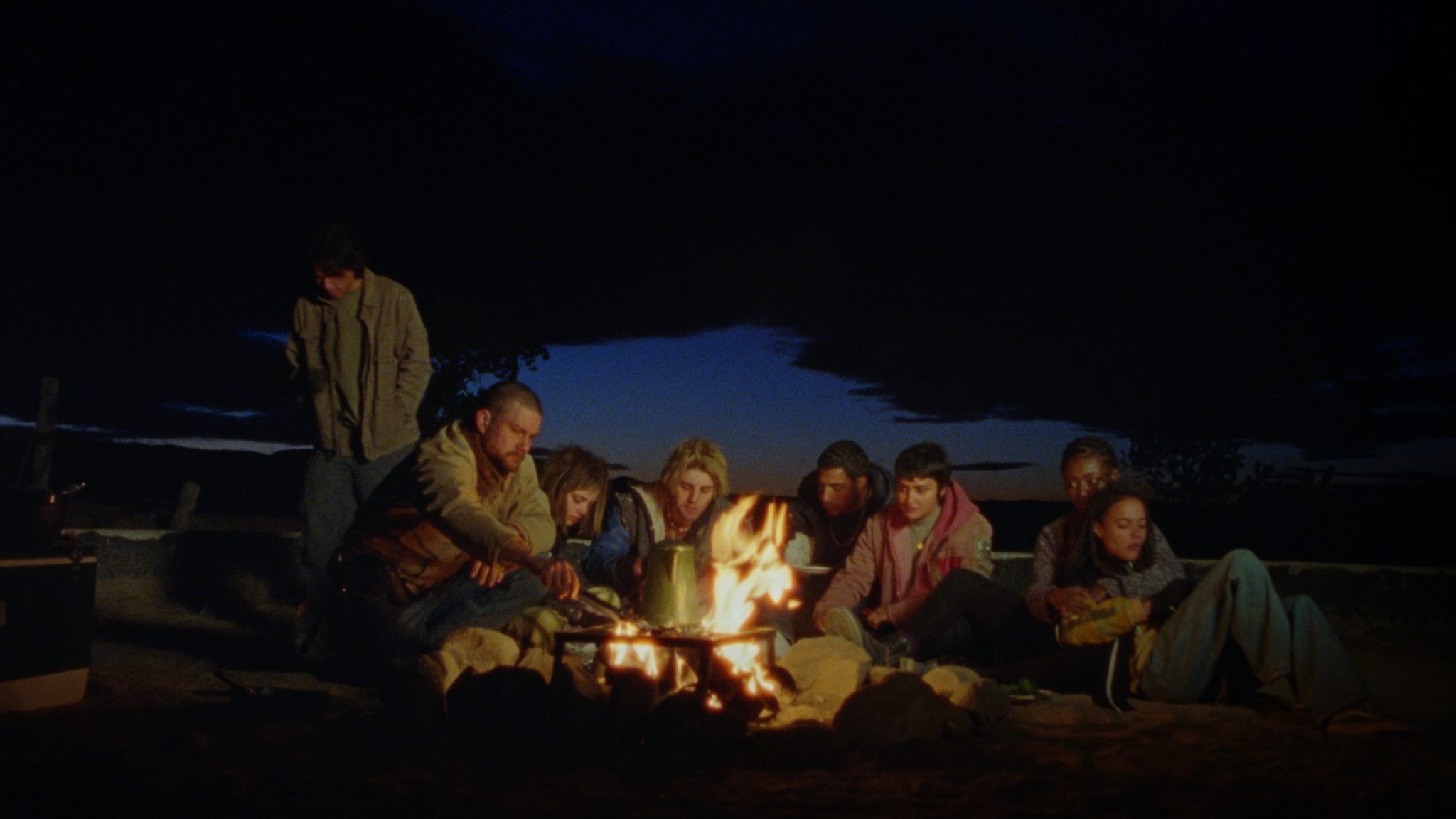
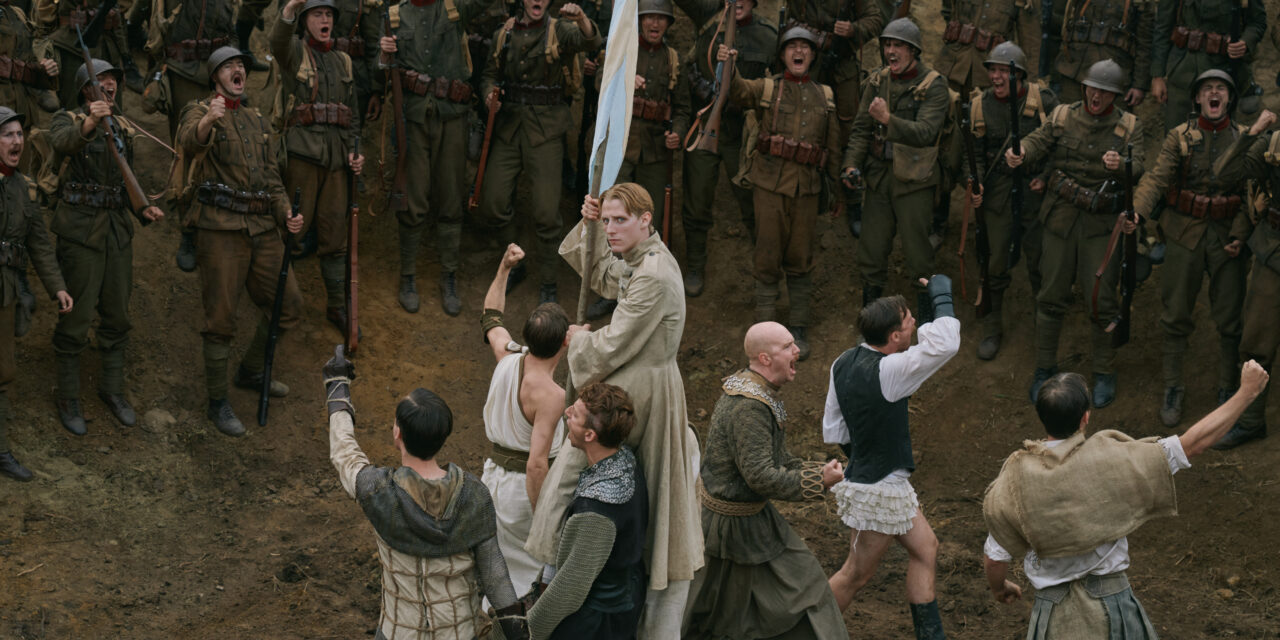
Coward sees Belgian director Lukas Dhont digging into a part of World War I history that is rarely covered in movies and TV. He focuses on a theatre troupe made up of rejected soldiers who were tasked with putting on musical acts and plays to increase morale for the men in the trenches. Leading this troupe is Francis, who encounters our protagonist, Pierre. Through Francis’ love of art, they slowly form a bond that goes beyond friendship. Pierre then does everything he can to stay alive, remain connected with Francis, and hold onto the hope that their relationship can extend beyond the front lines.
Dhont, like in his last Cannes winner, Close, proves he can make a very nice-looking movie. He uses a lot of shallow focus and shots that capture people in close-up within larger environments, reminiscent of Oscar winner Son of Saul. It has a more square-like aspect ratio that makes the characters within the frame feel more intimate, which works well in a lot of scenes, both romantic and violent.
The production design and sound choices are all impactful. Even when there isn’t any war action going on, Dhont pays attention to the spatial and emotional experience of loss, grief, and shell shock after battle. There are particular sound choices and changes in volume that help accompany some of the film’s more quietly devastating moments.
The main actors are very good and work pretty well together, although I feel there is something missing from their chemistry, especially when it comes to the more passionate, intimate moments and their conversations. Those dialogue scenes are, frankly, the weakest in the movie. The film works much better in scenes where there are clear physical or emotional stakes established before the scene even begins.
The film asks what it means to be a coward. Are you a coward because of your circumstances? And, even more troublingly, are you a coward because of who you love?
Coward is playing at TIFF ’26. For more information, click here.