Cannes regular (though not with this film) Jim Jarmusch tackles a three-part anthology film full of nuance and marked by a particular cadence. The characters have walls between them, and Jarmusch lets those walls become the drama. While all three parts share similar familial dynamics and a sense of melancholy, they differ significantly in characterization and central conflict. That’s because the conflict in each story is more imagined than seen. We never witness a fight, confrontation, or an overt expression of sadness or anger, and yet we know that not all is right between the family members in each story.
The first story follows two siblings, Jeff (Adam Driver) and Emily (Mayim Bialik), visiting their father (Tom Waits) in rural America for what seems like the first time in years. The underlying tension is that Jeff has sent his father money repeatedly over the past few years—money he believed was going toward rebuilding the house and helping him regain independence. He even hints that, while it wasn’t the only issue, the financial support he gave his father may have contributed to the strain on his marriage. Emily is less trusting of their father and appears to have a more awkward, distant relationship with him.
This segment’s car scenes stand out for their use of VFX. The characters are clearly not driving, and the compositing with the moving background doesn’t quite live up to the standards of most contemporary films. Still, this portion introduces much of the film’s humor.
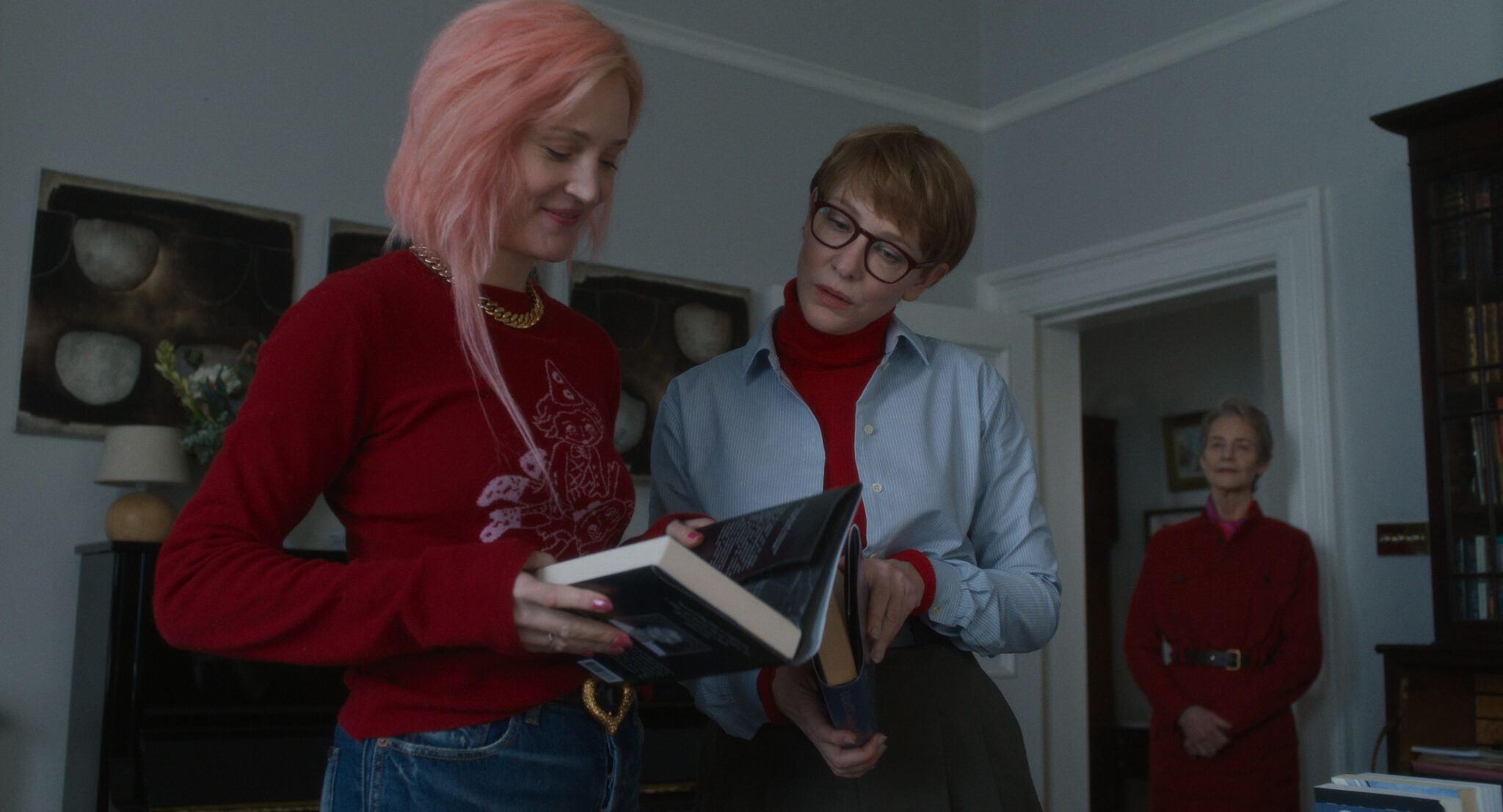
The second story centers on another pair of siblings, Timothea (Cate Blanchett) and Lilith (Vicky Krieps), as they visit their mother for their annual tea in Dublin. These sisters are not as close as Jeff and Emily and seem just as distant from their mother. Their mother is an author but prefers not to discuss her books, while Lilith claims to be an influencer being courted by a wealthy man. Timothea is the quiet academic, working for the Ireland Heritage Council. Their careers have little in common, and watching them attempt meaningful conversation feels like pulling teeth. There are many awkward moments and unspoken conflicts, but this segment is especially compelling in how Jarmusch captures them through editing and wide camera angles. There’s a purposeful distance in how the characters are framed, paired with an intimacy that invites us to contemplate their lives and what their words reveal about experiences we never see.
The third story is even more reserved, following siblings Billy (Luka Sabbat) and Skye (Indya Moore) as they uncover details about their late parents’ lives—stories they were never privy to. They knew their parents were adventurers and globetrotters before having children, but through the belongings left behind, they learn much more. Not all of it paints a clean picture. Still, the careful production design and well-considered props hint at the journey their parents lived. Like the siblings, we’re left to decipher what these objects mean and which chapters of their lives they come from. The larger story is only suggested. This is a more laid-back short, as there’s little tension between the siblings themselves. Instead, we simply spend a day with them as they pack their parents’ belongings into storage from their childhood apartment in Paris.
The film also employs recurring motifs and details to connect the stories, signaling that Jarmusch assembled them with intention. That purpose may resonate differently for each viewer, but it’s clearly there. While these motifs aren’t always integrated seamlessly, they’re intriguing to track. The film is peaceful, yet quietly reinforces the melancholic nature of each story. There are many funny lines drawn from everyday conversation and mundane moments, most notably in the first segment.
There’s a lot here to reflect on regarding family. The film invites you to fill in the gaps with your own experiences—your parents, your siblings. It captures what family feels like for those who aren’t exceptionally close to the people they’re related to. Instead of constant honesty or open communication, you end up imagining parts of their lives, piecing together meaning from what you observe or don’t ask about. Characters often don’t want to talk to each other, yet don’t quite know how to be together either. This idea is especially clear during the high tea scene in the second segment, where how someone pours tea, eats, or passes a cup reveals more about them than the awkward, limited conversation. It’s a unique film in both concept and execution, and it’s excellently made. Jarmusch is a remarkable director of actors, able to draw emotional weight from situations that might otherwise seem too small for a feature film. In his hands, these moments gain nuance and linger with the viewer.
Father Mother Sister Brother is available in theatres on Friday, January 9th, 2026.