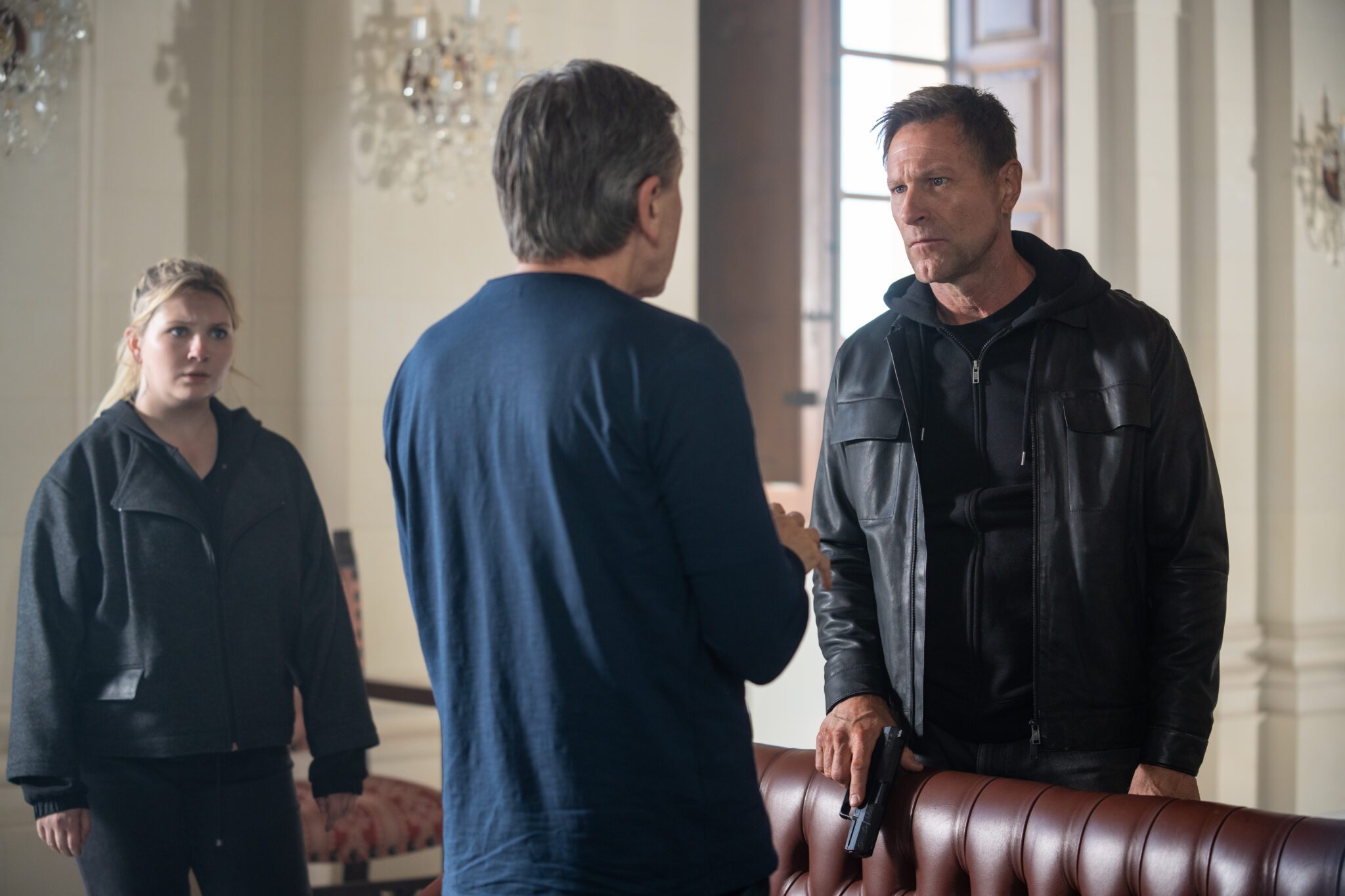

From several different perspectives, A House of Dynamite gives us the experience of how a nuclear strike could be handled by the authorities in the U.S Government. Taking place over an (not real) 18 minutes, we get a thrilling and tense exploration of power, authority and how the most threatening nation in the world may act when facing opposition. Despite having implications for the rest of the world, Oscar Winner Kathryn Bigelow keeps us in the spots of the people who would face the monumental task of preventing nuclear holocaust.
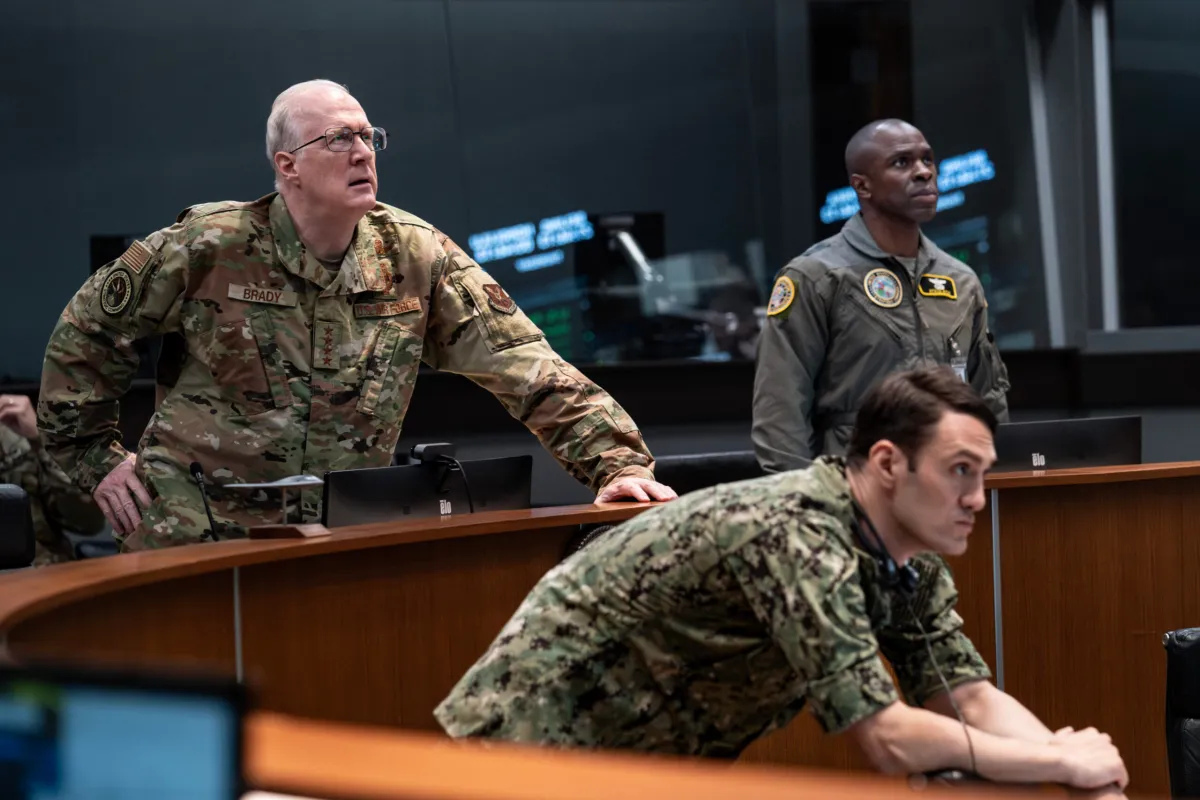
Dynamite still embraces Bigelow’s style of capturing fictionalized versions of America’s actual violent deeds. This film is treated no different as we see the very human mistakes, qualities and impulses through the eyes of a very human lens. With shaky movement and handheld zooms, Bigelow’s camera is able to capture these moments as if it were a person observing. The ‘fly on the wall’ style gives us a front row seat to the calm persona that they must all put on, even when it becomes clear how little power the most powerful people in the world truly have. The ability to capture details about every character in fluid camera is a great strength to this film and allows details to be captured about the details within seconds.
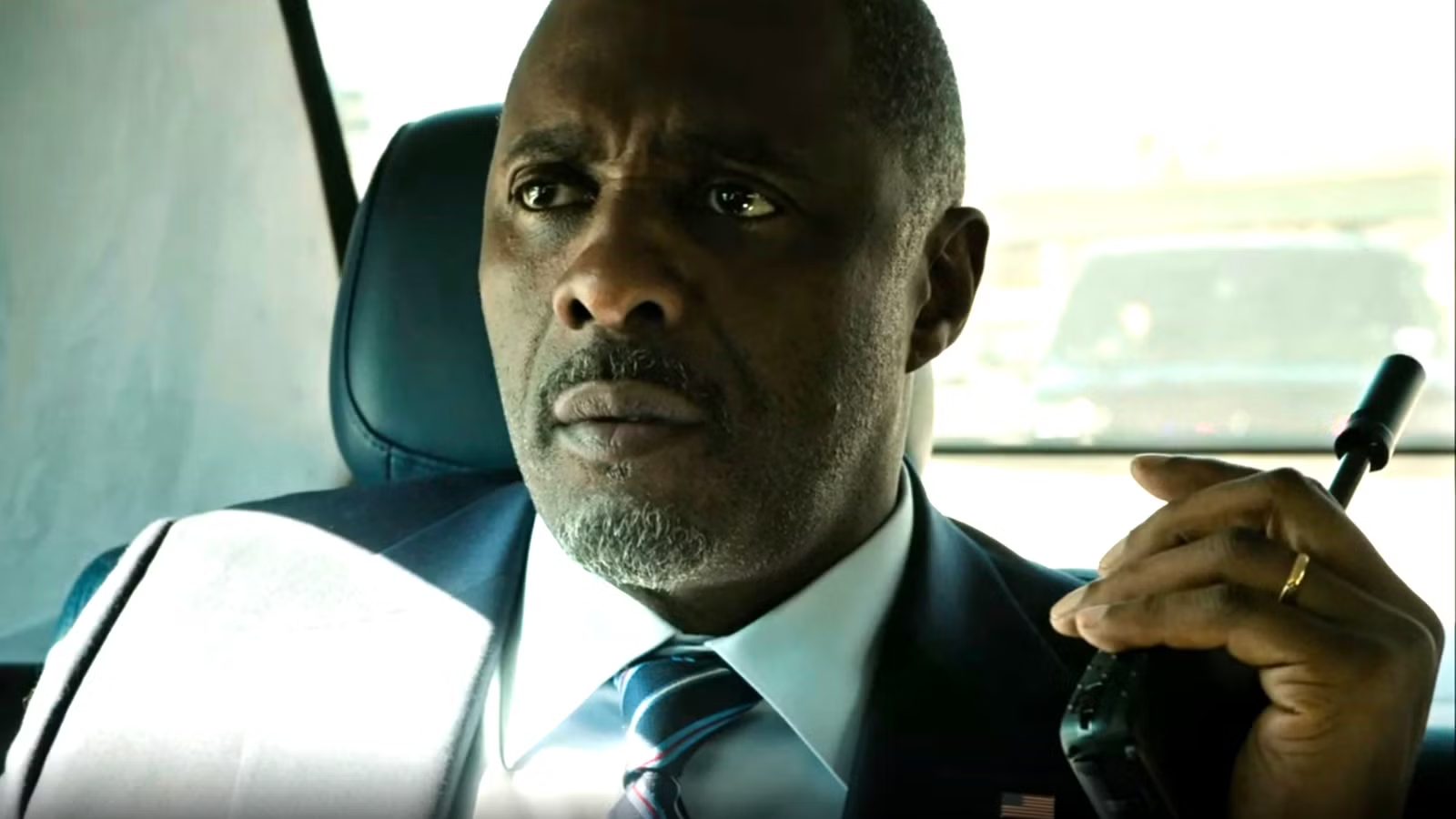
In Dynamite, the screenplay does sometimes clash with its visual approach at times. Bigelow makes use of a lot of visual storytelling, sometimes having title cards to explain what an acronym means. In this way, the film reveals one of its stronger weaknesses. It feels a need to inform, to bring us into these people’s lives which may be very different from our own but certainly, in this crisis, would not resemble humans. They speak in code between each other, while formally (and not emotionally) spelling out how to best prevent the death of millions.
Yet, the film also breaks from this because it knows that it needs us to see these people as flawed, people who may have been colleagues of ours who are now being handed the procedure to an unthinkable crisis. In these moments, some of the dialogue and moments come out a bit flat and sticks out in a way that may not be to the film’s credit. For some, that may be a moment that takes them out of the film’s attempt at an immersive thriller but for others, including myself, it reveals a humanity that is refreshing for this kind of bleak film.
The film’s music by Volker Bertelmann is properly harrowing and haunting. Fans of last year’s Conclave will surely note the score’s eerily resemblance to the Oscar-winning Pope drama. The shared use of a minimal strings chord along with rapid violin melodies will surely be noticed, especially in the first half, but the film is able to mix it up a little bit to avoid too much overlap between them. The emotions that it is trying to evoke are still elicited from its (at times) minimal and (at times) over-beating sound.
It becomes quickly evident how such a situation is not fit for mortal, emotional people. Unlike other nuclear war situations like we saw in this year’s Mission Impossible, Dynamite shows the weight of human melodrama on each of these people. Children to think of, last goodbyes to be had, prayers to be sent and everyone hoping that the failsafes will work, despite not being guaranteed ways to nullify the conflict. The result is a cluster of people whose voices overlap over each other, who are not in the right place and all while the fate of a large country and potentially the world is under strong threat. In this situation, vengeance is blind and done to potentially assert that America will not be toppled. The country who has been the target of both self-sabotage and international violence as the imperialists of the world is now on trial as jury, judge, victim and executioner. As many advocates and average people in America often ask, is a 50 billion dollar military budget really what will save a country from itself?
A House of Dynamite is available on Netflix now.