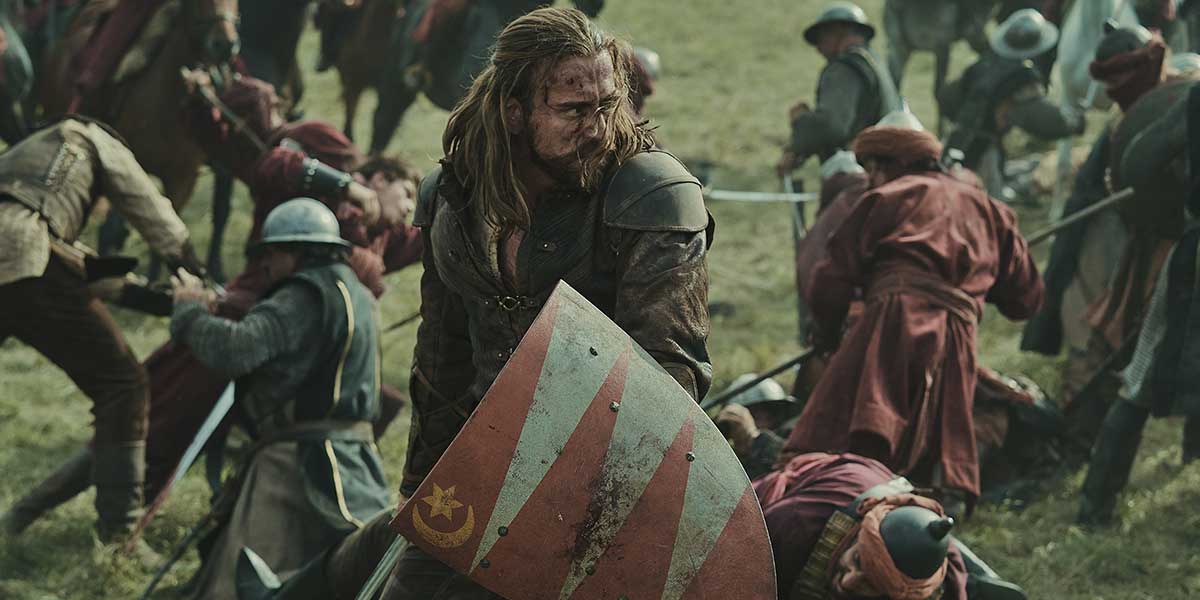
Rise of the Raven tells the story of Janos Hunyadi (Gellert L. Kadar), a young villager from Transylvania in the 15th Century. Living at a time of violence and brute strength, Hunyadi grew in stature to become one of the most feared commanders in the Kingdom of Hungary. Ferociously defending his country, Hunyadi fought against the Ottoman incursions until the climactic Battle of Belgrade in 1456. Here, his resilience is tested in an encounter that would shape Hungarian history forever.
Let’s get this out of the way quickly. Yes, Rise of the Raven does appear to bear remarkable similarities to uber-series, Game of Thrones. Nations clash over political machinations and (mis)dealings. Masculinity is determined by power—and power must be taken. And, of course, the series makes good use of there R-rating, filling the screen with violence and nudity. (In fact, even the opening credits simply feels oddly reminiscent of that classic intro across Westoros.) While there are no ‘whimsical’ elements to the series, the tone and style of the two series is comparable. For some, that’s a huge win. For others, potentially not.
Even so, that doesn’t mean that Raven can’t fly on its own merit.
In fact, it’s worth noting that Raven’s roots lie strictly within the history books. Based on the story of Janos Hunyadi, the Hungarian village boy who became one of the nation’s most feared figureheads, the series uses historical events as the backdrop of its dramatic tension.
In the end, Rise of Raven is admittedly a series that doesn’t break any particularly new ground that wasn’t found on the fields of Westeros. However, even with those comparisons, that doesn’t mean that the series doesn’t have fire in its belly. Backed by strong performances (especially from its women), Raven’s rise does create a world that one wants to follow, right to the bloody end.
Rise of the Raven is playing at TIFF ’25. For more information, click here.