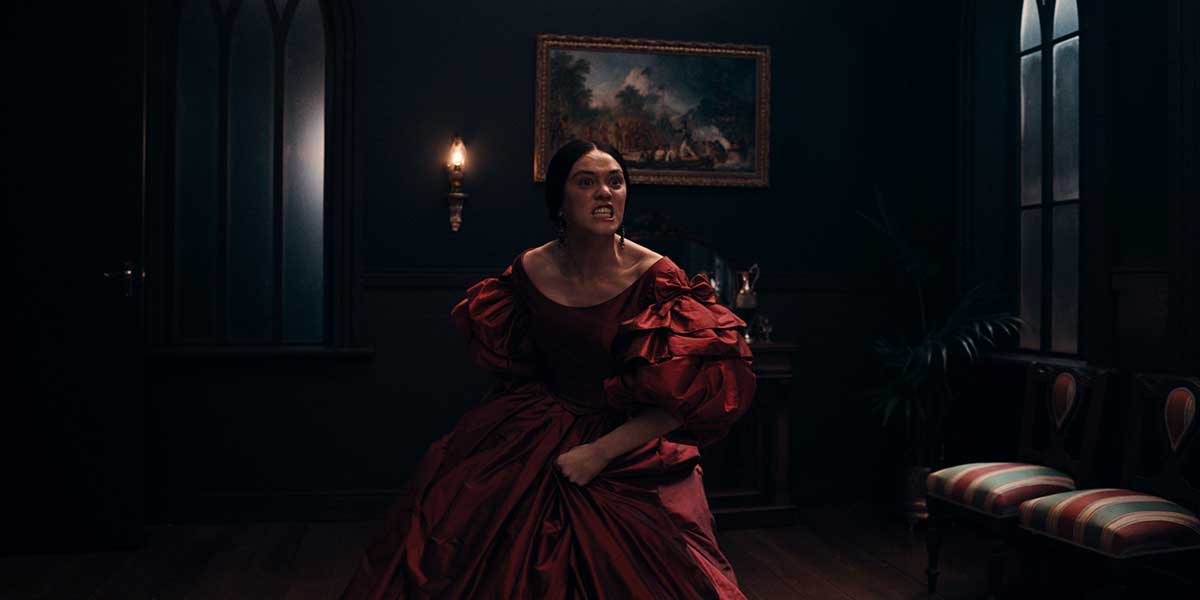
In response to a letter from a stranger, Mary Stevens (Ariāna Osborne), a Māori teacher, travels from Aotearoa to England to find out more about parents she never knew. On getting there, she learns that the author of the letter she received is dead, and is instead welcomed by Nathaniel Cole (Toby Stephens), a wealthy Englishman who is suspiciously fascinated with Māori culture. She stays in his house as a guest, and acts as governess to his young daughter, but visions of the past and future follow her until Nathaniel Cole’s true nature comes to light.
Set in 1859, Mārama, critiques colonisation and more – the objectification of a group of people and their culture. Cole represents a type of person who cosplays as another and will do everything in their power to maintain a proximity to them, even if that means removing any agency they have and displaying them like a hunter does animal heads. Honestly, even in real life, I side-eye people with a certain level of fascination with the ‘other’. While on the surface, their interest in the other culture may seem friendly, it is at best shallow – ignoring the lived realities of people in those culture, and at worst, possessive and violent.
Mārama does not shy away from its gothic-ness, weaving the brutality of colonisation and the influences of Māori spirituality into the genre. The eeriness of the film is also dialed up a lot by its sound design, keeping the audience unsettled by the entire situation from the beginning. With its stunning cinematography, Mārama, directed by Taratoa Stappard, visually represents what it means to remember history in order to move forward, and powerfully depicts a reclamation of identity through blood, sweat, and tears (literally).
Mārama is showing at TIFF ’25. For more information, click here.