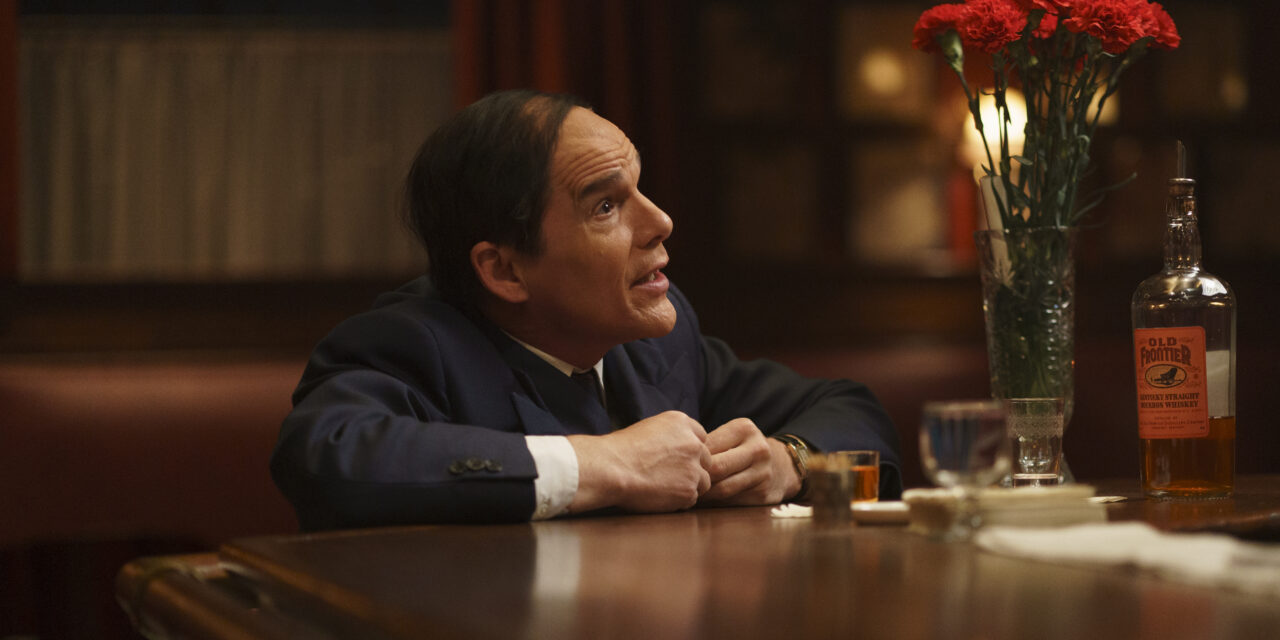
A short alcoholic walks into a bar having just witnessed the thing he feared the most. It feels like a bad twisted joke but our protagonist Lorenz Hart is seemingly only interested in spouting such jokes onto any ears that will hear them. Hart decides to haunt the bar where his former songwriting partner Richard Rogers will celebrate the universal praise of his new show Oklahoma! which he wrote with the little known Oscar Hammerstein. In this night, all of Hart’s biggest fears, hopes and vices are confronted as he must navigate moving on with his career in the wake of partners ready to leave him behind. The second partner is Elizabeth, a 20-year-old woman who the 47-year-old Hart declares he’s in love with but it becomes clear their relationship is a lot more complicated than an unrequited love.
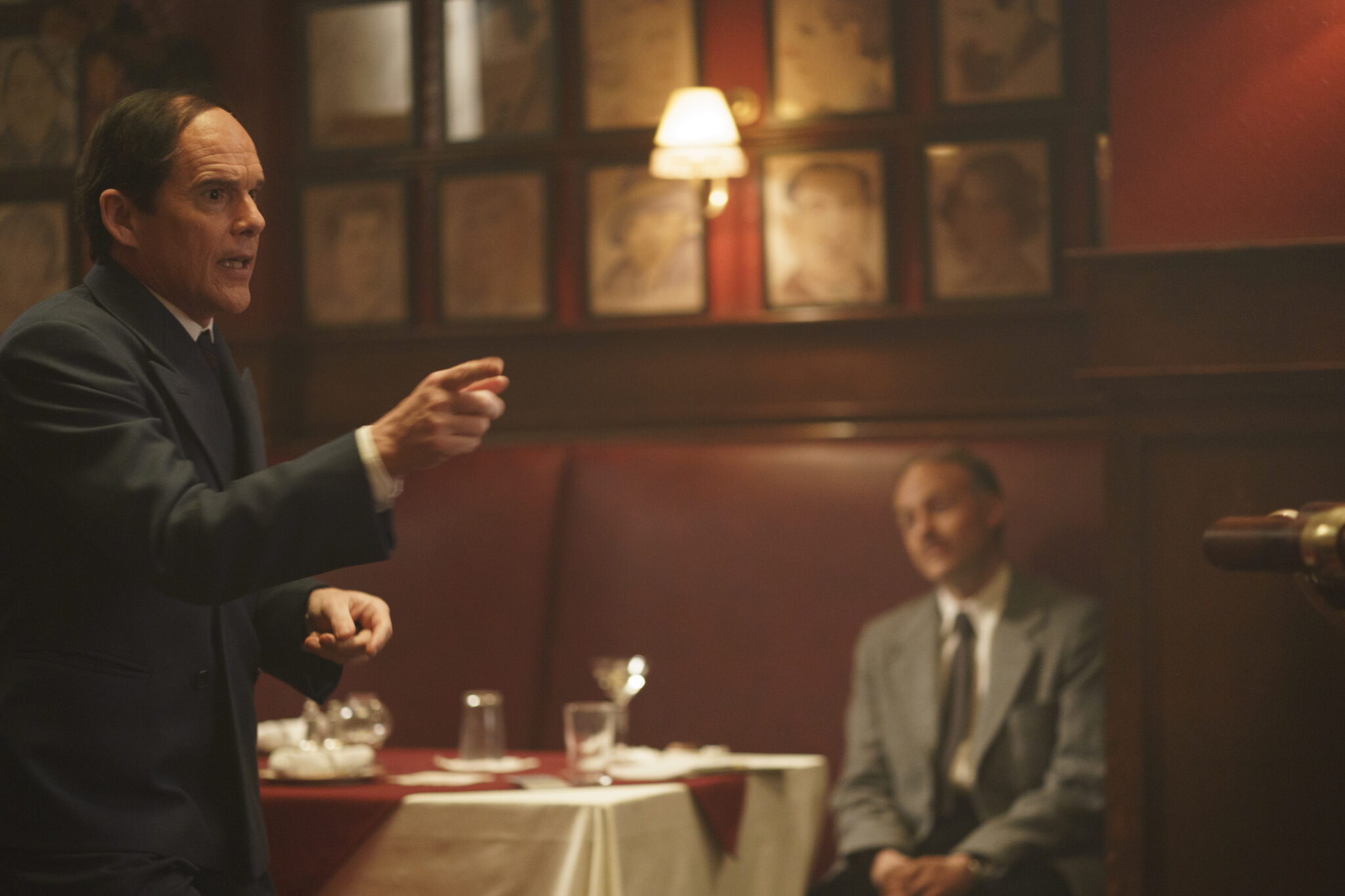
Prepare yourself for lots of dialogue which, for someone like me, is not a bad thing. I indulged and enjoyed all the wild, out of pocket lines and monologues given by this tight ensemble of actors, most notably Ethan Hawke. Hawke as Hart is a talker who cannot be stopped, commenting and critiquing so much that he repeats himself. Hart seems to be performing himself the whole time, acting as if he is the main character in a play where only those he cares about get to be supporting characters. Everyone around him struggles to get in a word as scriptwriter Robert Kaplow challenges the audience’s tolerance of a man who, for lack of knowing him outside this situation, would be seen as a self-obsessed narcisist. He rarely says what other people want to hear and seems to hold people hostage by what he says, yet there is a charm, wit and earnestness to his words that makes him tolerable and, for the audience, might help us see that there is more subtext to the many words he spouts.
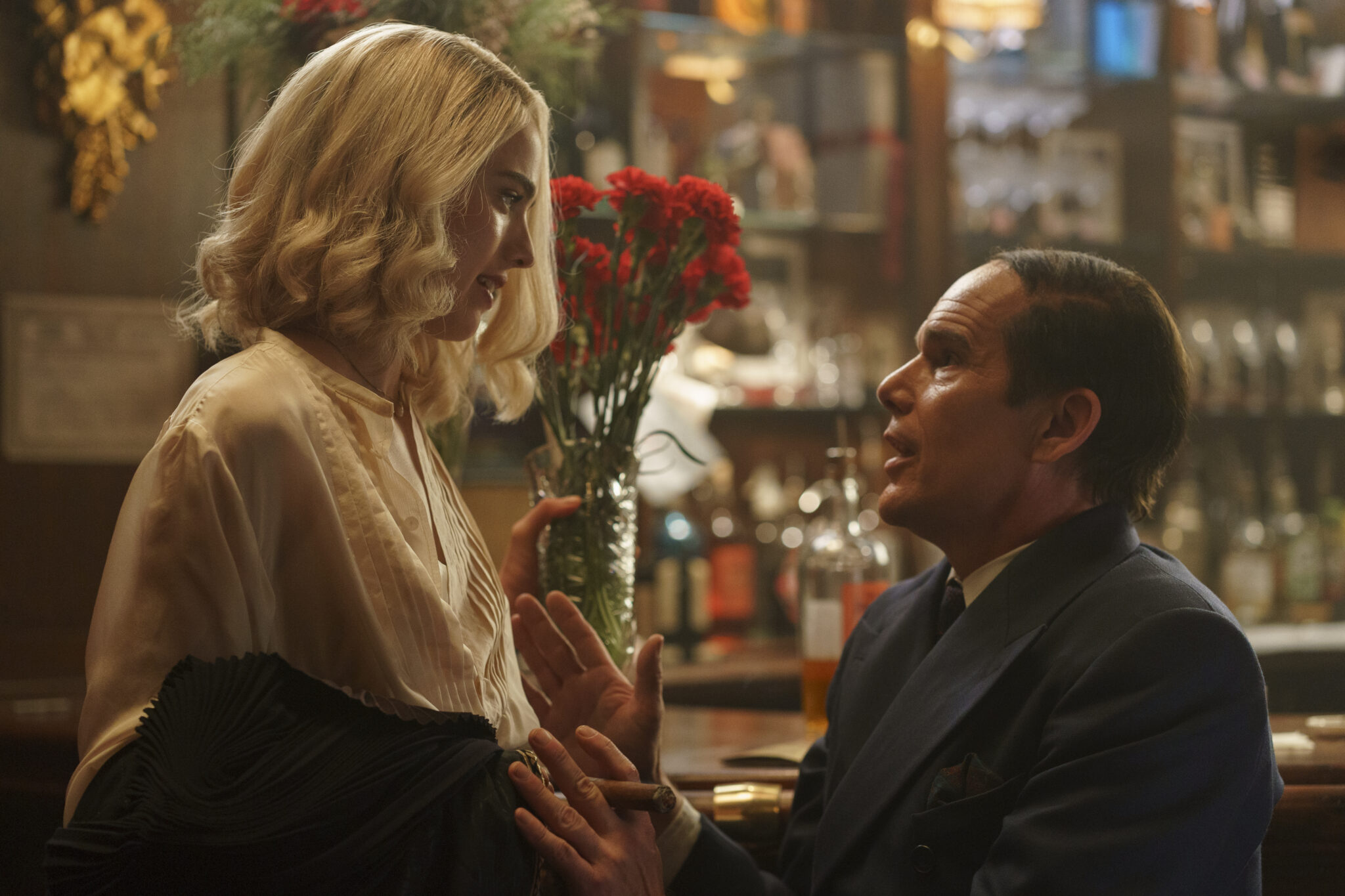
Ethan Hawke is amazing in this role, giving his most Oscar-bait performance. And that’s meant to be complimentary. He transforms into Hart, breaking down any perception of him as an actor and instead embodies a uniquely spoken man in emotional and intellectual turmoil. To match Hawke’s very music-like delivery are a strong ensemble of responders to his speeches. Most notably, Andrew Scott (who took home a Silver Bear from Berlin for his performance) is as impressive as he ever has been. He is one of few actors who can make himself so well known and understood simply by listening and trying to get a word in over the ranting Hart. His responses, though limited, then hit emotionally and spell out exactly why Hart is not where he wants to be in life. The second is Margaret Qualley as Elizabeth, the apple of Hart’s eye. She brings a youth and quiet energy to her role as someone who actually gets Hart’s ear instead of his yapping mouth. Her long scene with Hart is the highlight of the movie as we see Hart try to embrace a side of him he has denied for so long.
The storytelling in Blue Moon comes mostly through words but Linklater allows for that, using different angles and shot sizes when logical but still never really tries to push any unconventional cinematic style onto this chamber piece. He believes in Kaplow’s script and lets it shine. For a director who is so very steeped in indie film like Linklater, it feels like his chance to work with actors he loves in a play that is probably easier to present on the big screen then in a theatre. This is certainly not a bad thing but shows that a script and story like this may only be seen by more people as a film festival hit. While it has been a notable entry for many people, I fear this deserved film may undeservingly go underseen.
Blue Moon is in theatres now.
Photos courtesy of Mongrel Media.