

There are films that entertain, and then there are films that shake something deep within you. Fitch Jean’s It Comes In Waves belongs to the latter. Akai, a 17-year-old Rwandan refugee navigating the challenges of resettling in Canada after surviving the Tutsi Genocide, is tormented by severe anxiety attacks and instability at home. The film is a raw, unflinching look at trauma, survival and the cracks in a system that promises safety but often fails those who need it most. Jean’s direction balances tenderness with critique, spotlighting the vulnerabilities of refugees in Canada while honouring their resilience.
At the centre of this story is Adrian Walters, who has had a remarkable year, also starring in Outstanding, and earning himself multiple awards for his tour-de-force performance as Akai. Walter’s portrayal captures the raw and quiet strength of a teenager drowning in despair, desperately trying to keep it together. His performance has announced him as one of the most compelling actors to break out in Canada this year.
“It actually tracks back to The Porter, a series I worked on,” he tells me when I ask how he became involved with the project. “I almost said ‘no’ to It Comes In Waves; I really wanted to say ‘no’ because of my personal hesitations. Up until this offer, I had only done a short film that was about 15 minutes on-screen. So this was an opportunity to do something bigger, but I questioned if I could hold down the film from its first frame to its last frame.” He explains, “The funny thing was, after I accepted the role and arrived on set, the producer asked me if I knew how they had found me. It turns out that after looking for their lead for about a year, they saw me on The Porter and thought I was perfect for Akai. After seeing my demo reel, the director, Fitch Jean, wanted to meet me. We ended up talking for three hours and realized that we were in alignment and shared a vision for the story.”
Stepping into Akai’s shoes was a thrilling challenge. Walters’ first pass through of the script sparked excitement but, by the second read, the weight of the story hit him. “All of a sudden, all this fear and doubt started to creep in, and I questioned again whether or not I could play this role,” he admits, leaning back as he recounts the month-long internal negotiation. “I knew this was a real story, and so many people have lived through this or lost their lives. I didn’t want to play around with that. The gravity of the story really intimidated me.”
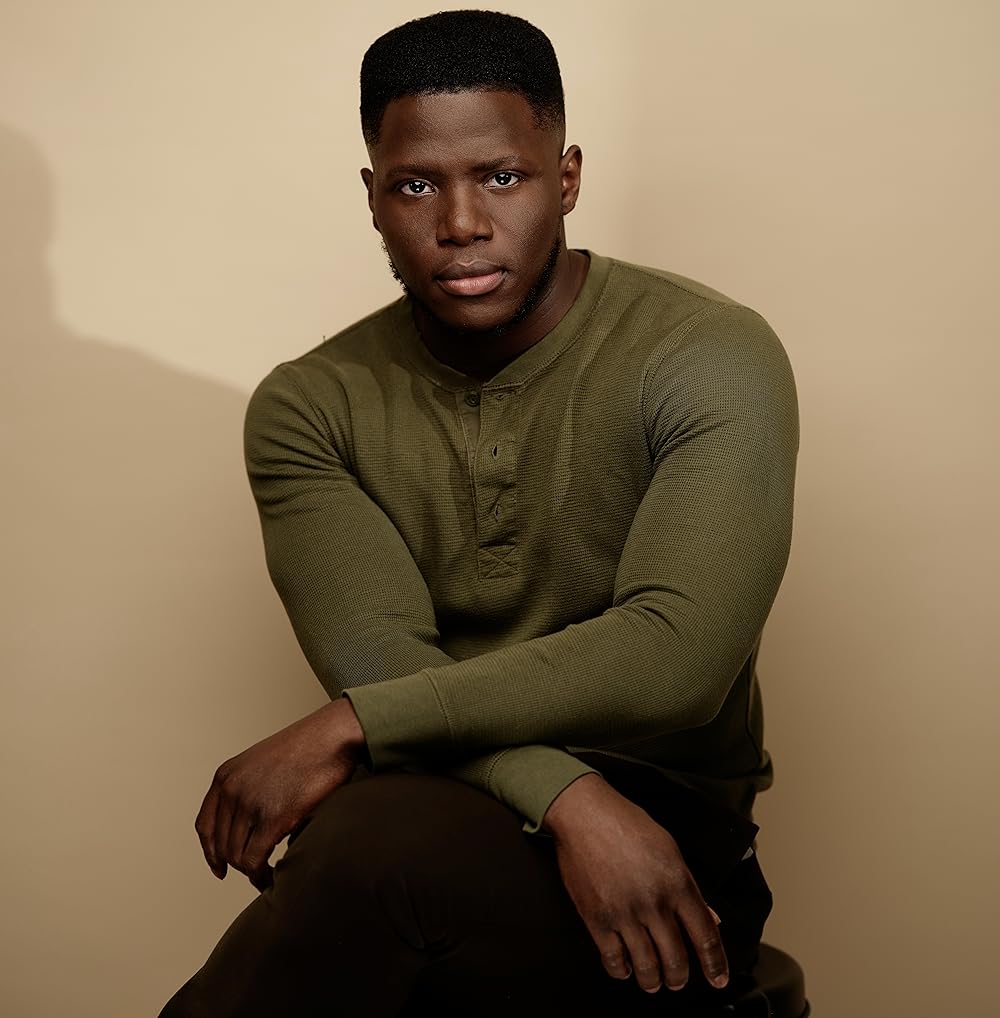
But, it was faith that anchored him. Remembering he is a man of God, he turned to his Bible, a ritual that reminded him to trust both his craft and himself. “I thought, if you claim to be the man of God you say you are, then why are you not anchoring yourself in what has carried you this far? So I pulled out my bible and read scripture, and I envisioned myself doing a great job and getting to the finish line and the film being a great product,” he reflects, his voice soft but resolute.
When he finally embraced the role, the real work began. He understood Akai demanded more than courage; he is a character who tries to stay balanced with running, but, as each day passes, his PTSD consumes him, and he learns he can’t run away from the shadow of trauma. Walters immersed himself in research. “For me, it was a really delicate story and I wanted to approach it with sensitivity,” he reflects. “Fitch is a really meticulous director, and he gave me a massive document with books, videos, and articles. He loaded me up with as much info as possible, and I went through it all and tried to absorb as much as I could. I also listened to trauma hotlines to learn how trauma lives in the body and what that looks like from high functioning to low functioning.” And among his technical preparations was the gift of connection with two survivors of the Rwandan genocide. “They hired two Rwandan genocide survivors as authenticity consultants. I had the opportunity to speak with one of them about a scene I was having difficulty with. It was all such a beautiful learning journey, and I have so much respect for people who have experienced trauma; this experience has left me with the desire to move around the world even kinder than I already have been. You never know what people are going through or what sort of trauma they have experienced.”
Portraying a character like Akai also demanded navigating the delicate line between empathy and self-preservation. Walters, who looks to God for guidance and spiritual nourishment, is also blessed with a community of friends and family who support his career, and one of them proved to be a major lifeline in dealing with the film’s heavy material. “There is a gentleman that I have worked with by the name of Leighton Alexander Williams. He is one of my biggest local acting heroes and has inspired me, spoken life into me and has breathed confidence in my abilities. We did a play called Judas Noir, and he taught me how to do a heavy role while protecting myself and the importance of an intense self-care process when going into these heavy roles. So I credit him for giving me these tools.”

The story also carries a larger commentary on Canada’s promises to refugees. Akai’s journey reflects the real-life systemic failures that put vulnerable youth at risk. He is isolated, and his economic hardship, trauma from his past, and the struggle to find belonging make him susceptible to negative influences, as gangs can offer a sense of identity, protection, and community that he lacks elsewhere. Fitch Jean’s film highlights how systemic gaps, limited access to mentorship, culturally sensitive support, and mental health resources can leave adolescents like Akai feeling unseen and unprotected, illustrating that his descent into risky circumstances is not a matter of character but of circumstance and survival.
“I definitely feel we can improve the infrastructure on how we support refugees,” Walter’s states. “Some people are on the fortunate side of coming to Canada with their families. In Akai’s case, he doesn’t really have a support system outside of Juanita and Coach P. So, I feel like a conversation could be started on how to support refugees and also how we can bridge communities, creating communities of people who don’t look like them, so they can feel safe and seen. Because it’s one thing to feel safe and seen amongst people who look like you, but even still, you can step outside your house and still feel like an outsider if you are not embraced.”
After years of consistent work, I suspected his recognition finally felt like a moment of fulfillment. He smiles, shaking his head slightly as he says, “It’s been humbling, and I feel a lot of gratitude because I wanted this position years ago. If you asked me on day one of my acting career, I would have said I’m ready.” He laughs. “But I realize now there were a lot of things I had to learn. I have learned to be as grateful for my ‘yes’s as much as my ‘no’s because it gave me the space of knowing that nothing outside of me will affirm me other than my Lord and Saviour Jesus Christ. I feel everything prior has prepared me for this, and I truly feel like this is just the beginning of what I will be getting up to.”
By the time the camera rolls, Walters has transformed preparation, discipline, and faith into a performance that is quiet yet seismic. Every glance, pause, and gesture carries the weight of Akai’s past and the tentative hope of his future. In It Comes In Waves, Adrian Walters doesn’t just inhabit a character; he carries a story, one of survival, faith, and the unflinching pursuit of dignity. His breakout year is a testament to both his talent and his devotion to truth in storytelling, and it leaves audiences knowing that this is only the beginning.




Deftly written. I hadn’t heard of this movie and after your glowing review, I find myself searching for more information. You have a proclivity for writing and I encourage you to continue.
This was short yet filling. Not long, but long enough. Well done.