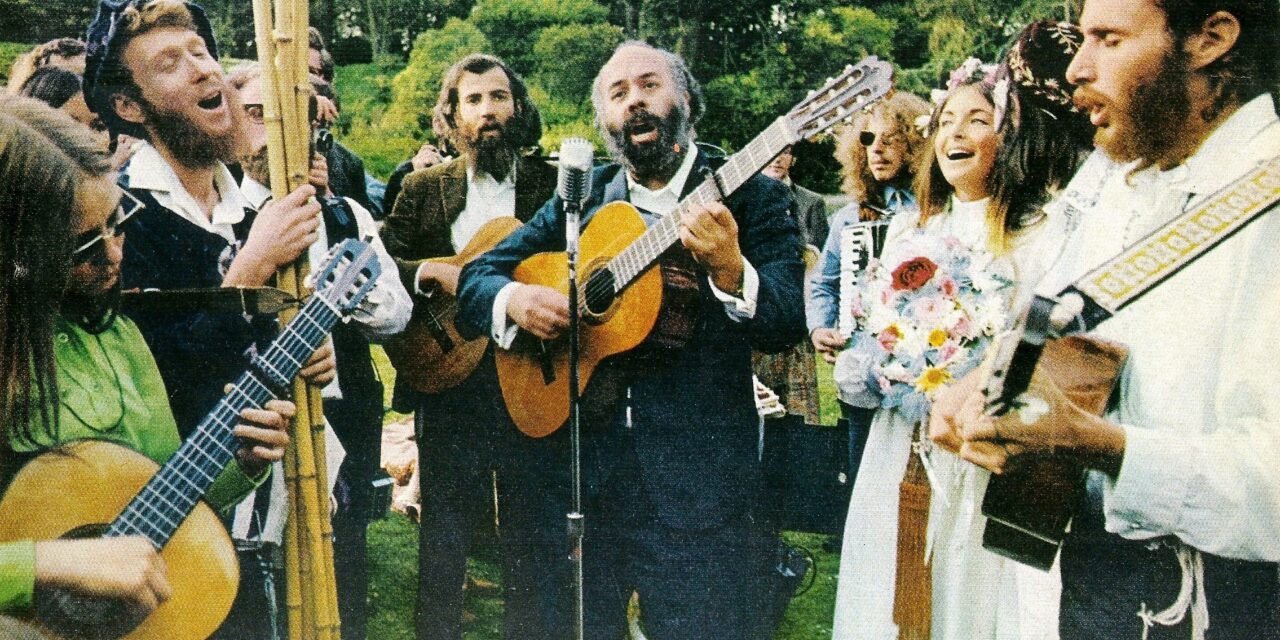
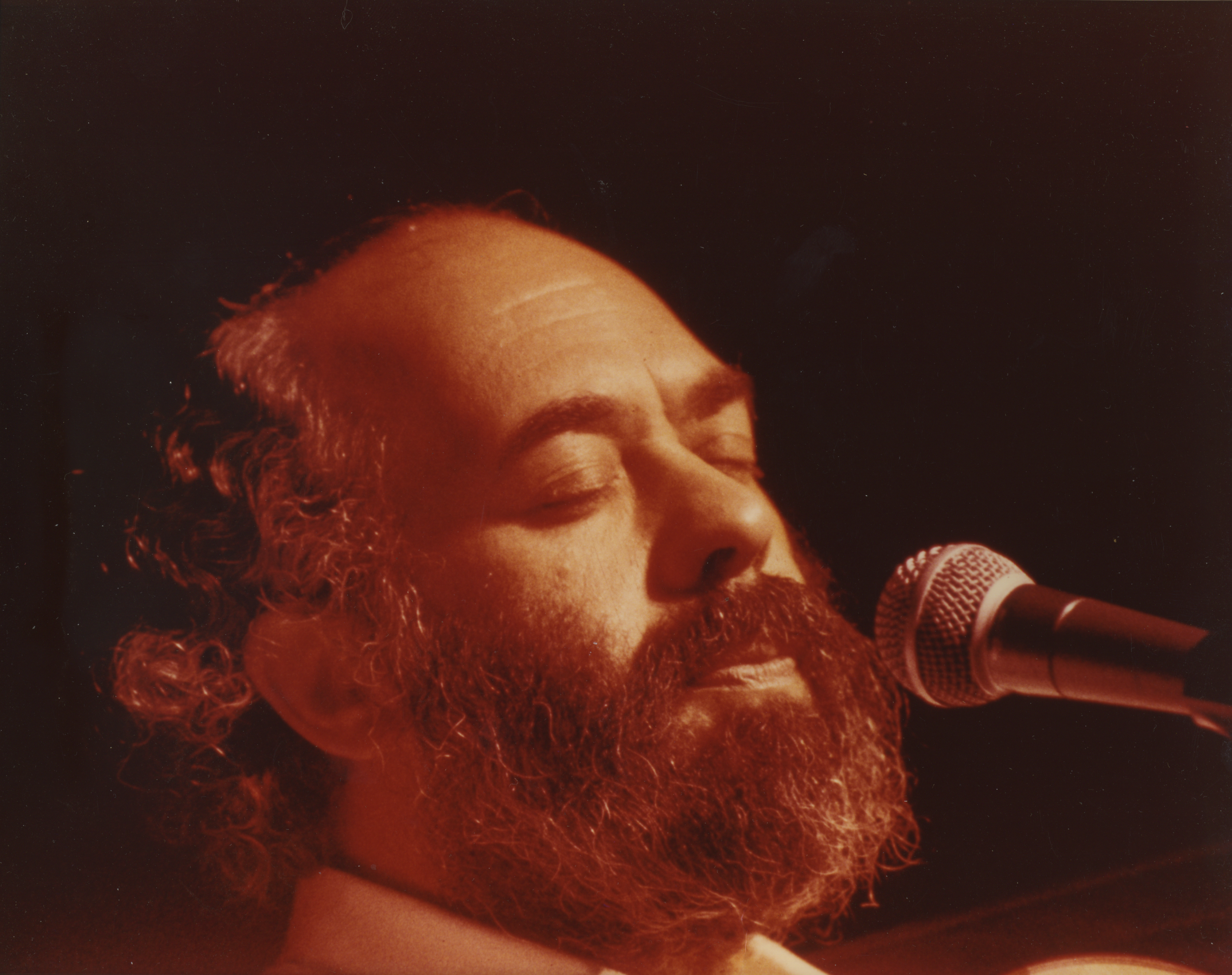
The film starts with powerful footage of worship alongside Rabbi Shlomo Carlebach, a famous celebrity rabbi who was widely celebrated within the Jewish community, almost like a rock star within his specific religious circles. He was famous enough that even Michael Jackson showed up at a synagogue one day. Quickly, though, as we learn about his accomplishments through an impressive collection of archival footage and editing, we begin to see how the glossy version of him has clear cracks. Through the voices of those he affected, who are given space in straightforward and honest interviews, we begin to understand a much more complicated person.
The film delivers simple interviews where his daughter sits down and explains her perspective on her father, a man who committed deeply harmful acts. She points the camera at herself, showing the things she has of her father and explaining what she can say about him with honesty and confidence. There is an impressive collection of archival footage that gives glimpses into a more honest version of who he was, even when he was not openly acknowledging or confessing what he had done. This leaves a shroud of mystery around his guilt because, even after his death, the music remains, the art remains, and there is still deep concern for the families and people who experienced his abuse.
His daughter approaches the story by looking at both the good things he did and the terrible things he did, attempting to understand the whole person rather than defining him only by his worst actions. However, while doing so, the film still gives complete space for his victims to speak their truth, while acknowledging that others may have different experiences or may struggle to reconcile the person they knew with the accusations against him. Many of the Jewish songs that are sung in synagogues today were created by him, and they are considered traditional or classic within Jewish communities across denominations.
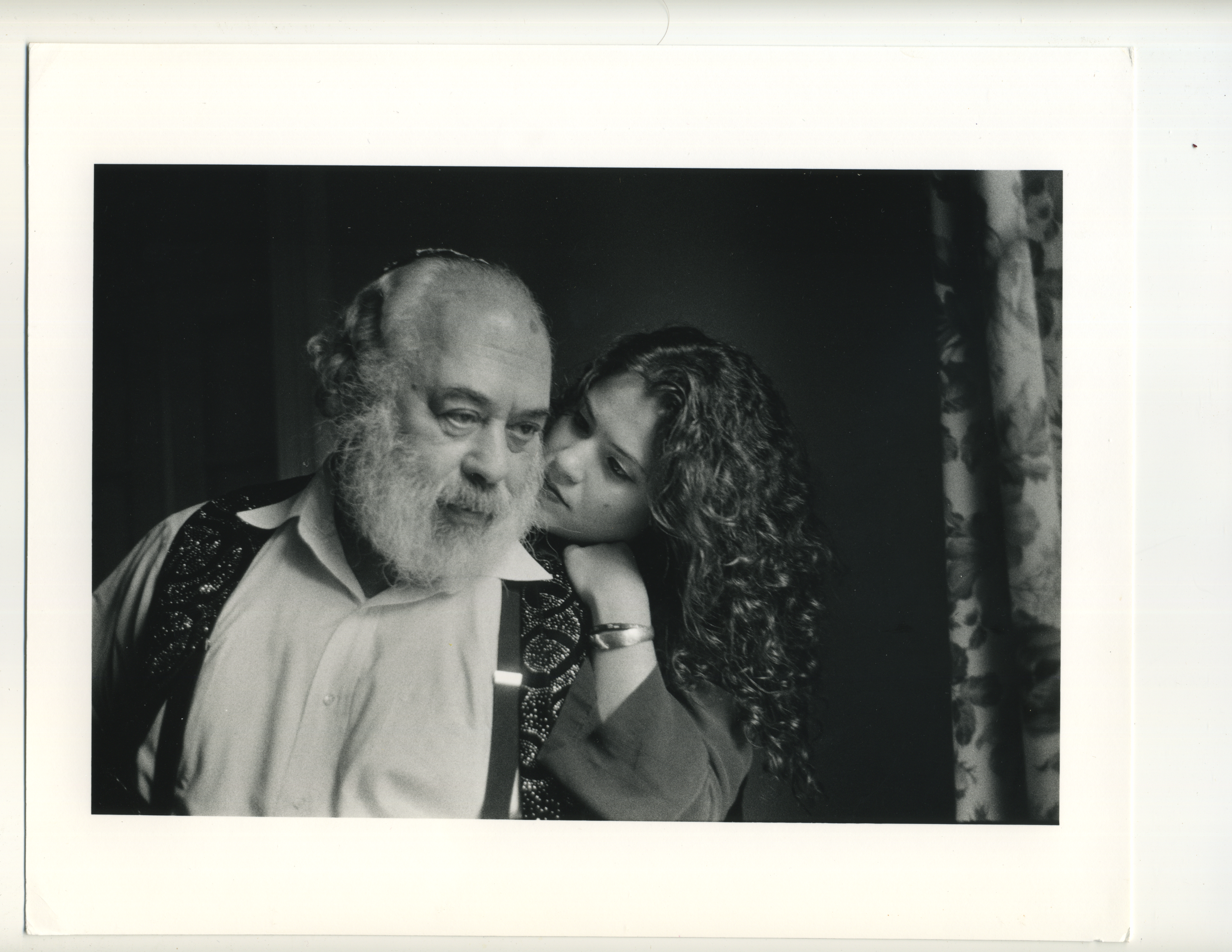
The film also interviews his sisters, who were even younger when they entered adulthood after his death and therefore had an even more innocent view of their father. They never experienced a side of him that made them believe he could have done those things. However, the film reveals how Rabbi Carlebach took advantage of women who lacked close family support, particularly those whose parents had passed away before these incidents occurred. Some of the women were as young as 14 and grew up in very conservative environments, meaning they did not have the tools or reference points to understand what was happening to them.
The same dynamic existed within Rabbi Carlebach’s own family. His oldest daughter recalls a horrific incident where another member of the Jewish community harmed her, removed her clothing, and was protected by her father’s disbelief. The man was a friend of his father, and Rabbi Carlebach dismissed the possibility that another man would be interested in his daughter because she was a child.
His journey is honestly extraordinary, even as someone whose sins would eventually come to define his legacy for many people. He came to America while fleeing Nazi persecution and apparently left on one of the last boats before Hitler stopped the ability for Jews to escape Europe. He made significant progress in recognizing that when Jewish traditions were followed in extremely strict ways, there was often little engagement with music or emotional connection. Among young people, he began imagining spaces and songs that could bring Jewish communities together and reconnect them with the heart of Judaism and its teachings.
He eventually filled a void after the Holocaust, when many composers had either died or been scattered around the world. He brought new music that attempted to create a sense of hope, joy, and spiritual connection. He then performed in secular spaces and received recognition from outlets like The New York Times, while receiving praise from figures in the music industry, including people connected to Bob Dylan’s career.
However, that success also appears to have inflated his ego and contributed to a feeling that he was untouchable, allowing him to believe he could behave in ways that crossed boundaries, specifically with young women in private situations. He was open about challenging certain Orthodox Jewish expectations, including restrictions around physical contact with women, and he presented himself as someone pushing against outdated traditions. Yet he continued to speak like someone above these same human faults, condemning the hiding of sins while seemingly engaging in that very behavior himself.
He appeared progressive because he allowed women to sing within Orthodox communities, even though this was traditionally discouraged because men might be aroused by women’s voices. He presented himself as a person fighting for women’s voices, and even attempted to mentor women and ordain them as rabbis. Yet the film highlights the contradiction that he relied on women not having a voice when it came to their experiences with him.
Because he did not have a will, his daughters began taking over his legacy as performers and singers. Because of their connection to him, they found significant success selling records and continuing to share his music and message. However, they were eventually affected by the #MeToo movement as well because of their connection to his name and legacy.
When articles detailing his actions emerged, the daughters initially believed the accusations were lies. They had footage showing him openly flirting with women and attempting to smooth over relationships within the congregation, while women admired his position as a musician and spiritual figure.
As a technical piece of filmmaking, there is nothing necessarily groundbreaking here. However, as a documentary that examines a prominent #MeToo figure, it offers honesty and complexity. It does not hide his flaws or the harm he caused, but it also does not dismiss the impact his work had on many people. In that sense, it becomes a very impressive and unique exploration of legacy, art, faith, and the complicated realities of human beings.
Darkest Light made its world premiere on July 19th, 2026 at the San Francisco Jewish Film Festival.