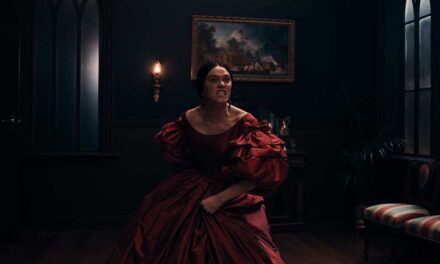
Sound of Falling documents different vignettes from four generations of young women on a farmhouse in rural Germany in a timeline that ranges from the beginning of the 20th Century to the present day. In each of small story of these women’s lives, we learn more and more about the pain that women experience at the hands of a patriarchal family and a community that tolerates male control and sexism.
The film has magnetic framing and perspective, often putting the camera at a distance or behind objects to block the view. What this creates is a sense of disconnection from the characters. What director Marscha Schilinski seems to be going for is a sense of objectivity, these women are not suffering simply because they seem to be hurt from the camera’s perspective. Rather, the camera hides and simply sees the struggle that these women undertake.
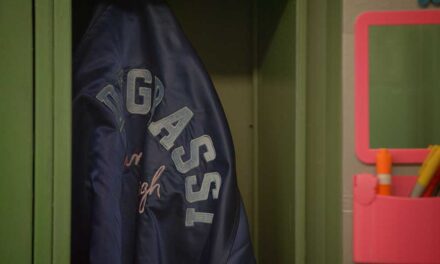
By pacing the movie slowly, it forces us to linger with the moments that matter. Marscha is also restrained in never showing violence or abuse on screen but rather letting us look at details to hint towards the inner turmoil of these characters. We can tell through the acting and these visual motifs the pain they are going through.
There is still an element of hope. These women keep living, despite the cycle of pain that the female experience brings. There is quiet moments of joy to be found in the bleakness and the film’s one song selection very much embodies that. It hopes for a better future for women while also acknowledging that the way our communities ability to tolerate sexism has remained.
Sound of Falling is playing at TIFF ’25. For more information, click here.